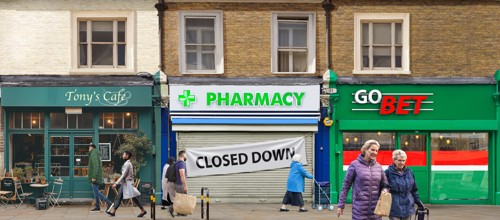
Deprived council areas have been disproportionately impacted by pharmacy closures in the last three years, according to new analysis by the National Pharmacy Association (NPA).
A localised analysis of the latest NHS pharmacy closure data weighted by population found that three quarters of the top 50 areas for closures in the country had higher than average levels of deprivation.
Around 9 in 10 council areas have seen at least one pharmacy permanently shut in the last three years, with around 1,400 having shut since 2016, when funding to pharmacies was first cut by the government.
The analysis also found that:
· Liverpool was the country’s capital for pharmacy closures, followed by York. Blackpool, Wakefield, Coventry and Kingston Upon Hull were all in the top ten council areas for pharmacy closures since October 2022
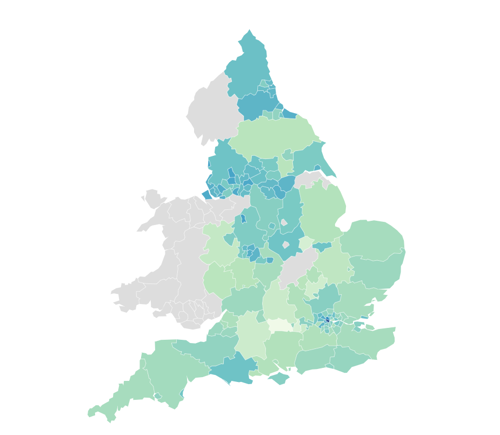
· West Berkshire retained its position as the country’s pharmacy desert, with the lowest number of pharmacies per head of population, followed by Wokingham. Rutland moved to third place. 90 per cent of the council areas for lowest provision were rural.
· Westminster, the area with the highest provision, has more than four times the number of pharmacies per head of population than West Berkshire, the area with the lowest.
This has left England’s pharmacy network at its smallest for 20 years.
Pharmacies and council leaders are warning that patients in areas with the highest health needs have been worst impacted by a ‘tidal wave’ of pharmacy closures in the last three years, with the risk of this widening health inequalities.
The NPA are calling on the government to provide an urgent funding uplift or risk the NHS’s Ten Year Plan ‘failing before it has even begun’.
It warned that giving pharmacies new services to deliver to patients to take pressure away from GPs could only be delivered with a sustained increase in funding.
In its submission to the Treasury ahead of the Budget, the NPA said investment in community pharmacy could help the NHS save billions of pounds by reducing waste and cutting hospital admissions.
Pharmacy leaders have also called on the government to reform the 'broken' contract with the NHS, after similar commitments were made to review both the GP and dental contracts.
Despite recent uplifts, pharmacies still face a funding gap of £2.6 billion due to the impact of historic 40 per cent cuts to their budgets.
However, recent NHS statistics show that an average pharmacy is now providing patients 30 per cent more medicines than it did just four years ago, with pharmacies now dispensing over 1.16 billion prescription items a year.
Previous NPA research had found that 73 per cent of pharmacy owners had raided personal savings or remortgaged their home to keep their doors open, with 63 per cent warning they may shut in the next year without more support.
Henry Gregg, Chief Executive of the National Pharmacy Association said:
“These are truly alarming statistics, showing that some of our most deprived communities with the greatest health needs have been hardest hit by a tidal wave of pharmacy closures in the last few years.
“This risks widening health inequalities as well as access to vital medication and care for patients.
“Those that have managed to keep their doors open have done so by going to extraordinary lengths and this is simply not sustainable.
“Community pharmacy is key to the success of the government’s 10 Year Plan but it risks failing before it has even begun unless we see urgent uplifts to funding.
“We want to work with the government to deliver new clinical services to patients and take pressure away from the rest of the health system but we cannot be expected to do this for free.
“We recognise the government took a step forwards in April but this needs to be the start of a journey, not the end of one.”
Cllr Dr Wendy Taylor, Chair of the Local Government Association’s Health and Wellbeing Committee, said:
"These new findings are concerning and highlight a deepening challenge in access to vital healthcare services in the communities that need them the most. The disproportionate impact of pharmacy closures on more deprived areas risks widening already stark health inequalities.
"Pharmacies are integral to community health, particularly in areas with high levels of deprivation, where they often serve as the most accessible point of contact with the NHS. Their role in providing essential medicines, advice, and increasingly clinical services is vital to prevention and relieving pressure in other parts of health and care services.”
Notes to editors
The National Pharmacy Association represents around 6000 independent community pharmacies.
The Local Government Association represents councils in England and Wales.
The analysis was based on figures published by the NHS Business Services Authority (NHSBSA) as part of the Consolidated Pharmaceutical List. Analysis of workload pressures on community pharmacies in England was based on statistics published by the NHSBSA
The figures represent provision by upper tier local authorities in England, weighted by population. They exclude Cumbria, which has experienced local government reorganisation and has no comparable set of data available.
A full data set can be made available on request.
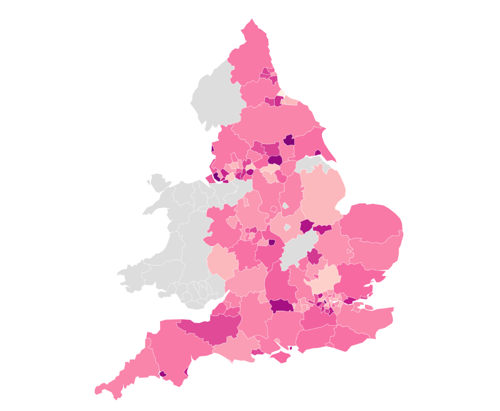
Maps containing the NPA's analysis of localised pharmacy provision, weighted and unweighted by population, can be found here, here and here.
Pharmacy closures per 100,000 population since October 2022
Pharmacies per 100,000 of the population
Total net pharmacy closures per council area since October 2022
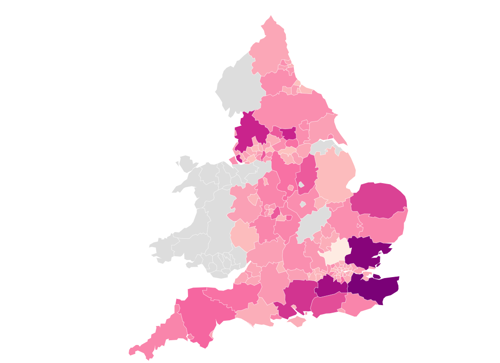
Tables of top 20 areas for closures and pharmacy deserts are below
Top 10 for closures
2025/26 Q1 | 2022/23 Q2 | Change per 100,000 population | Pharmacy per 100,000 2025/26 Q1 | Pharmacy per 100,000 2022/23 Q2 | |
Liverpool | 110 | 125 | -3.1 | 22.6 | 25.7 |
York | 36 | 42 | -3 | 17.7 | 20.7 |
Hammersmith and Fulham | 38 | 43 | -3 | 22.5 | 23.5 |
Coventry | 83 | 93 | -2.9 | 22.9 | 25.8 |
Wakefield | 68 | 77 | -2.8 | 19 | 21.8 |
Blackpool | 35 | 39 | -2.8 | 24.8 | 27.6 |
Plymouth | 47 | 54 | -2.7 | 17.7 | 20.4 |
West Berkshire | 16 | 20 | -2.6 | 9.8 | 12.4 |
Hull | 60 | 67 | -2.6 | 22.5 | 25.1 |
Rutland | 5 | 6 | -2.5 | 12.1 | 14.6 |
Top 10 pharmacy deserts:
2025/26 Q1 | 2022/23 Q2 | Change per 100,000 population | Pharmacy per 100,000 2025/26 Q1 | Pharmacy per 100,000 2022/23 Q2 | |
West Berkshire | 16 | 20 | -2.6 | 9.8 | 12.4 |
Wokingham | 21 | 22 | -0.6 | 11.8 | 12.4 |
Rutland | 5 | 6 | -2.5 | 12.1 | 14.6 |
Central Beds | 38 | 40 | -0.6 | 12.6 | 13.2 |
Wiltshire | 66 | 71 | -1 | 12.9 | 13.9 |
Oxfordshire | 100 | 106 | -1.5 | 13.1 | 14.6 |
Bracknell Forest | 18 | 19 | -0.4 | 13.1 | 13.4 |
Shropshire | 44 | 48 | -1.2 | 13.6 | 14.8 |
Cambridgeshire | 95 | 101 | -0.8 | 14 | 14.8 |