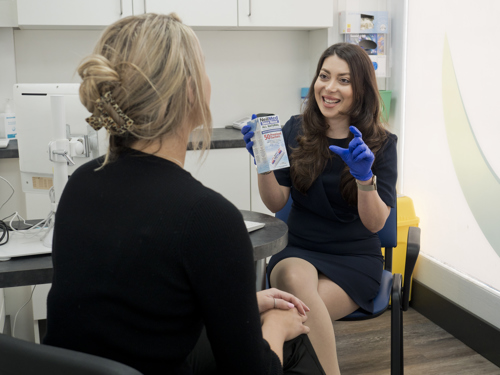
An army of pharmacists trained and qualified to prescribe medicines are set to join the high street from tomorrow (1st August), which could fuel a significant expansion in community care in neighbourhoods across Britain.
Pharmacy leaders are warning the NHS to ‘use it or lose it’ and commission pharmacies to provide more services, so these skills can be used to provide more care to patients on their doorsteps and alleviate pressure on other parts of the health system.
A cohort of an estimated one thousand newly graduated community pharmacists qualifying to practice in community chemists from tomorrow have the skills to prescribe medicines for a range of conditions for the first time, paving the way for the potential of more and more treatments to be available at high street pharmacies.
The National Pharmacy Association, which represents around 6000 independent community pharmacies hailed the change as ‘game changing’ for patients as the number of qualified prescribing pharmacists is set to soar in coming years.
Today’s newly qualified prescribers are the first cohort of pharmacy students in the UK who have ever graduated with the skills and training to prescribe medicines for a number of conditions, alongside medical professionals such as nurses.
The NPA estimated that in the future the majority of pharmacists working in the community will have the training to prescribe medicines for some conditions, potentially making treatment for minor conditions much easier for patients to access close to home.
The NPA said that ongoing training, safety procedures and governance would ensure pharmacists practice safely and supplement the vital role of GPs in our communities.
A new report by the NPA predicted that there could be enough prescribing pharmacists nationally for every pharmacy in England to have at least one by 2031, due to changes meaning that graduate pharmacist now qualify as prescribers after their five year training.
A recent study commissioned by the NPA and produced by ThisCovery found that on average, nearly 3 in 4 patients (72 per cent) were comfortable with pharmacists prescribing for a range of health conditions without them needing to see a GP.
88 per cent backed pharmacists prescribing treatments for insect bites and in some instances for some asthma symptoms (55 per cent). More than eight in 10 (86 per cent) felt this would be particularly beneficial when out of hours when other parts of the health system, particularly GPs, are closed.
The report also called for clear governance arrangements to make sure all prescribing pharmacists are fully supported to practice safely, as well as funding and infrastructure to include facilitation of information sharing between pharmacies and GP practices
The government did fund limited prescribing in pharmacies for the first time in May, allowing pharmacists to use some of these skills as part of the Pharmacy First initiative but have yet to expand the use of prescribing beyond this.
Olivier Picard, Chair of the National Pharmacy Association said:
“Today is an historic day, with the potential of more prescribing services being available to patients in their pharmacy without the need to go to a GP.
“This is a golden opportunity to safely shift more care into the community and could be game changing for patients and the wider health system.
“As our report shows, recent changes to training could mean that every pharmacy in the country could have a prescribing pharmacist by 2031, a change that has the potential to revolutionise local NHS care.
“This is a use it or lose it moment for the NHS. If we are to fully utilise these skills and not lose these staff members, the government should commission pharmacies to provide more prescribing services on the NHS.
“It’s important that these developments also come with funding and support so pharmacies can ensure they have the safeguards and infrastructure in place to support this development.”
Notes to editors
There are already 3,154 pharmacists in England who have undertaken additional training to become prescribers, meaning they can provide prescriptions to patients without a patient needing to visit their GP. Pharmacists only prescribe where clinically appropriate and will work in partnership to signpost patients to GP's where a condition requires it.
A full copy of the NPA's Insight Brief: Prescribing in Community Pharmacy can be made available on request.