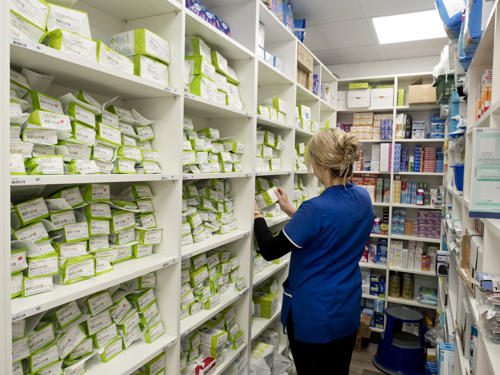
Pharmacy leaders branded the charges a ‘cruel tax on illness’ and urged the Chancellor to use the Budget next week to scrap the charges in efforts to ease the cost of living, alongside charities.
A survey of adults across England found 12 per cent said they delayed getting a medicine last year due to concerns about the prescription charge while 41 per cent were worried about being unable to afford their NHS prescriptions.
An estimated 11.6 million patients paid prescription charges last year, with an additional 3.3 million patients who have multiple repeat medicines paying through pre-payment certificates (PPC). Patients with a PPC paid £114 a year or up to £480 a year if they had at least four prescription items to collect in a month and did not use a PPC.
The NPA, which represents around 6,000 pharmacies across the UK, said that it was a ‘national scandal’ that patients were deterred from accessing medicines due to cost. The association said the charges ‘undermined the fundamental founding principles of the NHS’.
The NPA have told the government that pharmacists have been left in an ‘impossible position’, with pharmacies reporting of patients with multiple, one-off, medicines asking for advice about which is the most important to take.
In Wales, prescription charges were scrapped in 2007, Northern Ireland in 2010 and Scotland in 2011. In England, some patients are exempt because of their age, if they are on benefits or if they have certain long term health conditions.
Polling commissioned by the NPA and carried out by Savanta found that 8 in 10 (80 per cent) of respondents thought it was unfair that patients in England were charged a prescription fee whilst the rest of the UK were exempt.
Patients who are forced to pay the charge include some university students and those with potentially serious long term health conditions including Parkinsons, Asthma, multiple sclerosis, Chron’s or Kidney disease.
None of the revenue from prescription charges goes to pharmacists, who are forced to act as tax collectors for the government. Instead, prescriptions charges swelled Treasury coffers by £732 million last year, up £80 million from 2021.
The charge also creates significant administrative burdens on pharmacies who are under unprecedented workload pressures, preventing them from providing care to patients.
The NPA have also urgently raised with the Treasury the need to support pharmacies with increases to their business rates, given recent commitments to reforming the rates system. Unlike GPs, pharmacies pay business rates, despite 90 per cent of their income coming from the NHS.
Olivier Picard, Chair of the National Pharmacy Association said:
“No patient should ever see cost as being a barrier to accessing the medicines they need but this polling shows an alarming number do.
“It is a national scandal and deeply unfair that anyone could consider stopping vital medicines because of cost.
“This cruel tax on illness, where some patients are exempt but others are forced to pay simply because they have the wrong kind of illness, undermines the founding principles of the NHS.
“If the Chancellor wants to tackle the rising cost of living and health inequalities, he should bring England into line with the rest of the UK and scrap this unfair and complex prescription tax.
“Pharmacists are health professionals, not tax collectors. They should spend their time helping patients, not administering an unfair tax on illness.
“Pharmacists do their best to support patients to bring down the cost of prescriptions but are in an impossible position. They should never have to answer questions about which medicines a patient should go without.”
Sarah Sleet, Chief Executive at Asthma + Lung UK, said:
“It’s alarming that people are being forced to go without vital medicines. For people with lung conditions like asthma and chronic obstructive pulmonary disease (COPD), being able to take medication shouldn’t come down to whether or not you can afford it. But because respiratory conditions aren’t included on the prescription charges exemptions list, people are left essentially paying for their right to breathe.
“Lung conditions hit deprived communities the hardest and as winter approaches, people living with respiratory conditions – who are at a higher risk of ending up seriously unwell in winter – face the double blow of unaffordable prescription charges alongside increased heating bills.
“Asthma + Lung UK agrees with the NPA that prescription charges should be scrapped.”
Marianne Radcliffe, Chief Executive Officer at Crohn’s & Colitis UK said:
“We know prescription costs are a major concern for many people in our community, many of whom rely on medication every day to manage their condition. No one should have to make difficult choices between paying their bills and getting the treatment they need to stay well. Life with a chronic illness is challenging enough without the added burden of financial pressure.
"The list of conditions exempt from prescription charges is outdated and urgently needs reviewing to include Crohn’s, Colitis and other life-changing long-term conditions.
"We support calls to scrap prescription charges in England. People with long-term conditions should not be forced to choose between their health and their finances simply because they need medication every day.”
Fiona Loud, Policy Director at Kidney Care UK, the UK’s leading kidney patient support charity, said:
“The current system is unfair for people with kidney disease, many of whom need to take powerful medication for the rest of their lives. Dialysis patients (over 30,000 people) are particularly disadvantaged as they are at the mercy of whether their GP classes their dialysis access as a medical exemption to qualify for free prescriptions, and they need dialysis to stay alive.
"People who have had a kidney transplant - a treatment, not a cure for kidney disease - are not exempt despite the fact they have to take an average of 10-15 different medications (between 20-30 tablets) every day including those that stop their body rejecting the transplanted kidney. It’s simply not a fair system because it penalises ill health; everyone should be able to access the medication they need to stay well for free, without worrying about whether or not they can afford it.
"That’s why we support the NPAs call for the Chancellor to bring the unfair and unjust system in England in line with the rest of the UK.”
Peter Lloyd, Senior Policy Manager at the MS Society, says:
“It’s outrageous that anyone should face the choice between financial sacrifice and going without essential medicines.
“MS is a debilitating, exhausting and unpredictable lifelong condition. Many people with MS need to take several medications to manage symptoms like pain, spasticity and bladder problems, but MS is not on the medical exemption list. This means someone with the condition in England can be charged for medicines that are free in Wales, Northern Ireland and Scotland. We support the NPA’s call to end this injustice, and we urge the government to reconsider who is exempt from prescription charges.”
Laura Cockram, Head of Campaigns at Parkinson’s UK:
“People with Parkinson’s rely on medication to manage their symptoms, yet many struggle to afford the prescriptions they need. A missed, reduced or delayed dose can cause their health to seriously deteriorate. This can lead to greater reliance on NHS services and hospital care, which costs a lot more than £9.90 to deliver.
“Freezing prescription charges is a short-term measure for a long-standing problem. With the current freeze due to end in 2027, the upcoming Budget is an opportunity for the government to take meaningful action. If they are serious about tackling the cost of living crisis and preventing avoidable ill health, the government must scrap prescription charges in England, bringing us in line with the rest of the UK.”


